
INNOVEX 2026 Focus Two: Future Sustainable Food Systems
South Africa's 2024-25 summer grain and oilseed harvest was estimated at 20.08 million tonnes, up 30% on the year before. In the same period, about one in four households suffered moderate or severe food insecurity, and severe hunger rose from 6.4% to 8.0% in four years.
Those two facts do not fit the usual explanation. If hunger came from a failure to grow food, a record crop would have eased it. It did not, which puts the failure somewhere between the field and the plate. That is where the second focus of INNOVEX 2026, Future Sustainable Food Systems, is aimed.
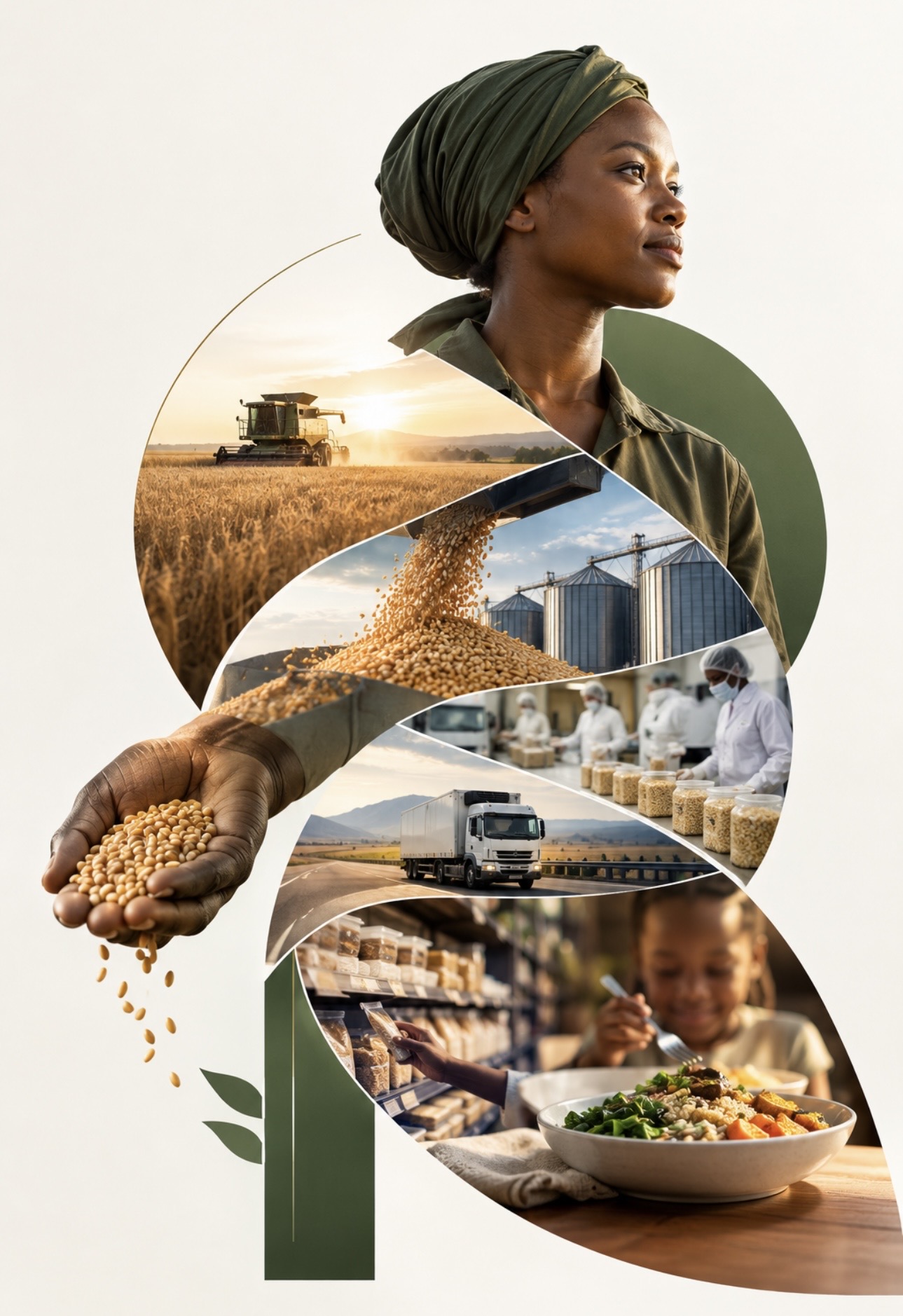
The gap is a chain of small businesses Between a harvested field and a household meal, food passes through storage, processing, packaging, cold chains, transport and retail. Most of these links are run by small and medium enterprises, and each one adds a cost that ends up in the shelf price.
Each link also depends on something outside food:
- Energy. A cold room, a mill and a delivery bakkie all run on electricity or diesel. When fuel and power costs rise, they enter the price of every item that passes through. - Water. Irrigation, washing, processing and cleaning all draw on a supply that is already under pressure in much of the country. - Information. A producer who cannot trace a batch, forecast demand or prove standards cannot sell into formal retail, however good the product is.
This is why food sits within a programme of four connected focus areas. Energy, water and digital are the conditions under which a food business either holds its costs down or passes them on to the household.
What a food system looks like from Rustenburg INNOVEX takes place on 26 and 27 November at Ben Marais Hall in Rustenburg, in the platinum belt, where mining, rural development and household food demand meet. About 800 SMEs and entrepreneurs are expected, together with government, funders, corporates and technical institutions. Attendance is free.
That mix suits a food conversation, because a food business needs more than one kind of support:
- A producer needs funding that matches a growing season. The National Empowerment Fund and the IDC are among the funders attending. - A processor needs technical support on standards and efficiency, which the CSIR can provide. - A supplier needs market access, which is what Proudly SA and corporate buyers represent. - A policymaker needs to hear from the businesses on the ground, which is why the Deputy Minister of Small Business Development and the North West MEC for Economic Development and Rural Development are on the programme.
Three questions for the food sector 1. Where in the chain does a good harvest stop reducing prices for households? 2. What is the smallest set of changes in energy, water and data that lets a small food business sell at a lower cost? 3. Which funder, buyer or institution needs to be introduced to which entrepreneur for that to happen?
None of these has a single answer, and none can be answered by one sector alone.
Food entrepreneurs, farmers, processors, suppliers and food-tech innovators can register for INNOVEX 2026 at no cost.
Back to News